Clocks Don't Exist in Here: The Strange Time Warp Inside a Radio Booth
Somewhere around the forty-minute mark of what was supposed to be a fifteen-minute segment, veteran talk host Marcus Delray realized he had no idea what time it was. The guest — a retired fire investigator from Tulsa — had started telling a story that nobody planned for, and the two of them had just... kept going. The producer was waving from behind the glass. Delray waved back and kept talking.
"I genuinely thought maybe ten minutes had passed," he says, laughing. "It wasn't until I saw my producer holding up a handwritten sign that said 'SERIOUSLY STOP' that I even looked at the clock."
That segment became one of the most replayed clips on his station's website for three straight months.
This isn't an accident. And it isn't just Delray.
The Booth Is Its Own Universe
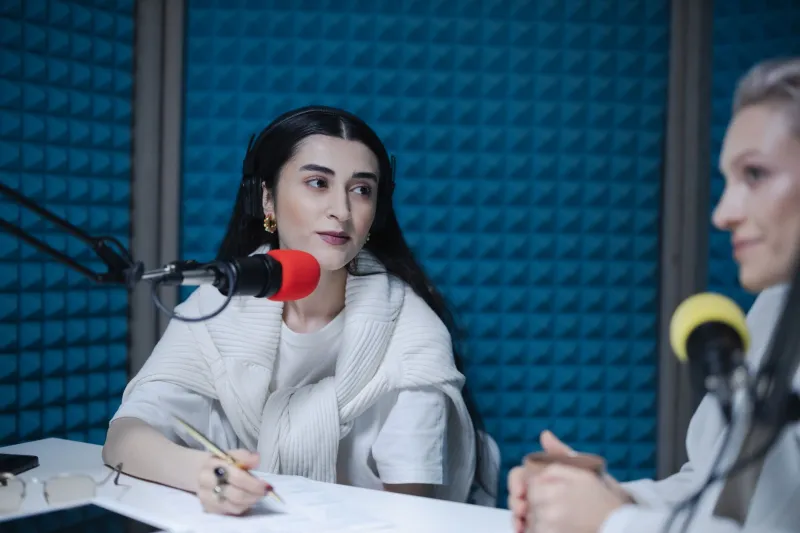
Radio studios are, by design, sensory minimalists. There are no windows in most broadcast booths — light control, soundproofing, and the practical reality of building layout see to that. There's no live audience offering the kind of real-time social feedback that comedians, teachers, and public speakers rely on to calibrate themselves. There's no body language to read. No shuffling of feet, no eye rolls, no nodding heads. It's just voices bouncing around a padded room.
For hosts who've spent years in that environment, the effect becomes almost meditative. The outside world fades. The normal social pressure to wrap things up, to check your phone, to glance at the clock — it all dissolves. What's left is the conversation itself.
Psychologists have a name for this kind of experience. It sits close to what Mihaly Csikszentmihalyi famously called "flow" — that state of deep absorption where self-consciousness drops away and you're fully locked into what you're doing. Athletes describe it. Musicians describe it. Surgeons describe it. Turns out, talk radio hosts describe it too, just with more coffee and worse chairs.
When the Clock Stops, the Real Stuff Starts
Kayla Norris has been hosting a midday talk show out of Nashville for going on eight years. She's sharp, prepared, and runs a tight ship — most of the time. But she'll tell you her best moments came from the times she stopped running anything at all.
"There's a version of me that's checking the segment clock every ninety seconds," she says. "And then there's the version that forgets the clock exists. That second version is way more interesting to listen to, apparently."
She recalls a conversation with a caller — a Vietnam vet from rural Kentucky who'd originally called in to talk about local zoning laws — that drifted into a forty-five-minute, unplanned discussion about memory, grief, and what it means to come home. No prep. No outline. Just two people talking in real time.
"My program director called it the best radio I'd ever done," she says. "I almost cut it off three times because I thought we were running long."
The irony is thick. The moments that feel the most out of control are often the ones that resonate the hardest with listeners.
Why the Brain Does This
Our perception of time is heavily dependent on external cues — light levels, social interactions, physical movement, hunger. Strip those away and the brain's internal clock gets unreliable fast. Studies on sensory deprivation have shown that even mild reductions in environmental input can cause significant distortions in how long we think time has passed.
A radio booth isn't a float tank. But it's closer than most workplaces get. The combination of acoustic isolation, artificial lighting, and total focus on a single auditory task creates conditions where the brain happily loses track of duration.
For hosts, this can work in both directions. A rough segment with a difficult guest can feel like it's dragging on for days. But a genuinely absorbing conversation? An hour can vanish like it was fifteen minutes.
"I've had segments where I come out and my producer tells me we went long, and I swear to you I felt like we'd barely started," says Chicago-based host Terrence Wahl, who's been doing afternoon drive radio for over a decade. "And those are almost always the ones people are still talking about the next week."
The Unplanned Segment Problem (That Isn't Actually a Problem)
Here's the tension that every talk radio producer knows well: the tighter the format, the safer the broadcast. Segments end on time, ads run, the station doesn't get fined, everyone goes home. But "safe" and "memorable" rarely share the same zip code.
The segments that go sideways — that run long, that veer off-topic, that find some unexpected emotional corner nobody was looking for — those are the ones that get clipped and shared and texted to friends at 11 PM with a note that says "you have to listen to this."
Producers who've been around long enough have learned to read the signs. There's a particular quality of stillness that settles over a booth when something real is happening. The host stops glancing at their notes. The guest leans in. The air in the room changes, somehow, even through glass.
"You learn to let it breathe," says one producer who asked to stay anonymous ("my host doesn't know I let him go fifteen minutes over half the time"). "You know when you've got something. You don't kill it."
The Magic Is in the Forgetting
What all of this points to is something that sounds almost counterintuitive in an industry obsessed with structure, formats, and clock management: the best radio might happen precisely when hosts stop trying to make good radio.
The booth's isolation, the sensory quiet, the slow erosion of time awareness — these aren't bugs in the system. For the hosts who've learned to lean into them, they're the whole point. The moment you stop performing and start actually talking, something shifts. Listeners feel it. They always feel it.
Marcus Delray, the host who went forty minutes over with the fire investigator, still gets emails about that segment years later. People tell him it felt like sitting in on a private conversation. Like they'd stumbled into something they weren't supposed to hear.
"That's the thing," he says. "I wasn't performing. I'd completely forgotten I was on the air. And that's exactly why it worked."
The clock on the wall of his booth is still there. He just stopped looking at it so much.