Lose the Announcer Voice: The Accent You're Hiding Is the Whole Act

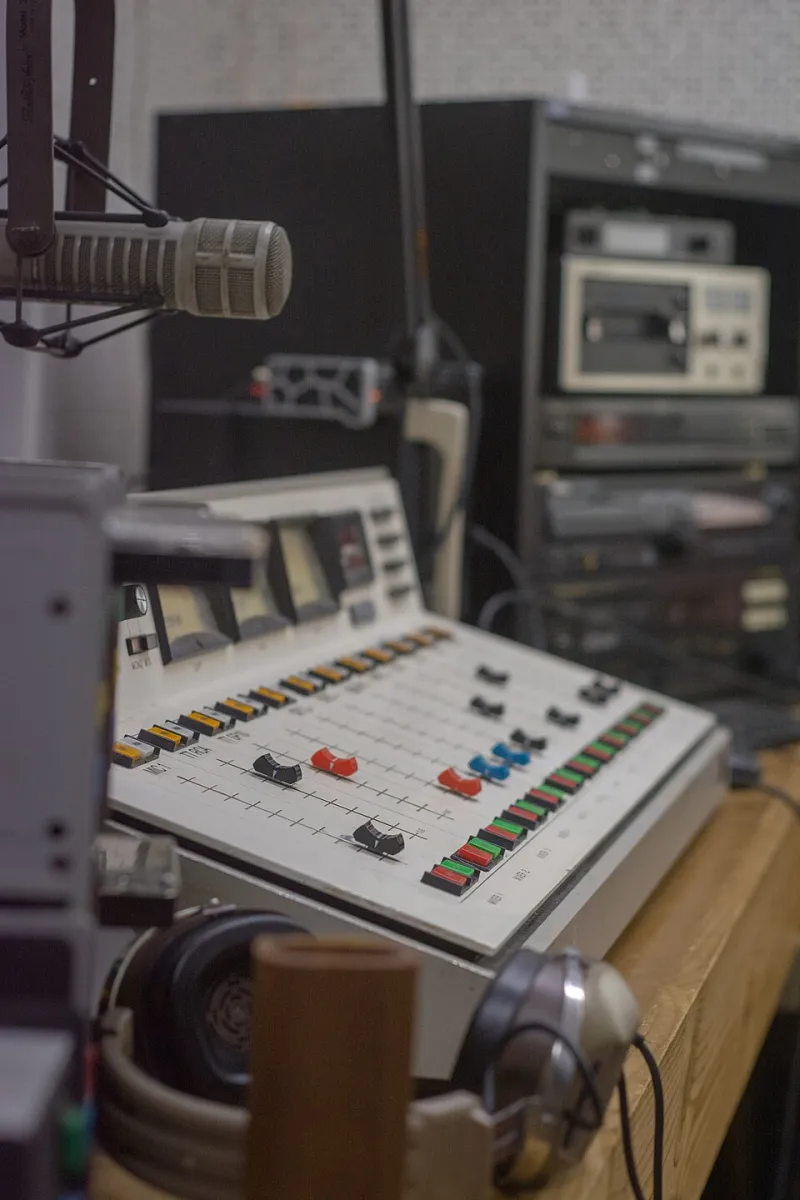
Photo: Lunchbox LP from Culver City, CA, USA, CC BY 2.0, via Wikimedia Commons
Every week, someone sends us a demo reel that sounds like a museum exhibit. Perfectly flattened vowels. Breath support like a church organ. Not one syllable that betrays where they're from or what they've been through. And every week I want to write back the same thing: stop. You're polishing away the only thing you own.
The Announcer Voice Was Always a Costume
The mid-century 'radio voice' — that baritone, mid-Atlantic, no-rough-edges delivery — wasn't natural talent. It was a broadcast-era technology constraint wearing a suit. Microphones were forgiving, bandwidth was narrow, and stations wanted hosts who sounded like authority because authority is what sold soap. That era is over. It's been over for a while. The most listened-to voices in American audio right now crack, ramble, and say 'y'all' without apology.
Imperfection Reads as Honesty
Here's the uncomfortable math of modern listening: audiences have been trained by a decade of podcasting to hear polish as salesmanship. A too-smooth delivery triggers the same defense mechanism as a commercial. Meanwhile, a host who mispronounces a town name and laughs about it has just told the listener something no coaching can fake — I am a real person and this is really live. Trust, which is the entire currency of talk, flows toward the flaw.
Think about the hosts who built empires from nothing. Nearly all of them sound intensely, specifically like themselves — the regional twang intact, the verbal tics intact, the occasional word-stumble intact. Strip that away and you don't get professionalism. You get nobody.
What Actually Makes You 'Radio-Ready'
If polish isn't it, what is? Three things, none of which require a voice coach.
Stamina. Talking coherently for three hours is an athletic event. That's trainable, and it matters far more than timbre.
Listening. The best hosts are elite listeners. They hear the question behind the caller's question. No amount of vocal grooming substitutes for this.
Opinions. A distinctive voice is mostly a distinctive point of view that happens to come out of your mouth. If your takes are generic, no amount of resonance saves you. If your takes are sharp, nobody cares that you say 'warsh' instead of 'wash.'
The Region Is the Brand
There's a reason the most beloved voices in audio come with a map attached. A Boston host who says 'car' like a threat. A Texas host whose drawl slows a hot take down to something almost meditative. A Midwest host who can make 'oh geez' carry an entire argument. These aren't liabilities to train out — they're sonic signatures no competitor can copy, because they took a lifetime to develop.
So to the kid in the closet studio with the noise floor and the untrained voice: that's not what's holding you back. What's holding you back is the hour you wasted trying to sound like someone on the radio in 1962. Sound like yourself, badly and often, until the audience can't imagine the dial without you.