Turning Off the Mic: The Untold Story of Talk Radio Stars Who Quit While They're Ahead
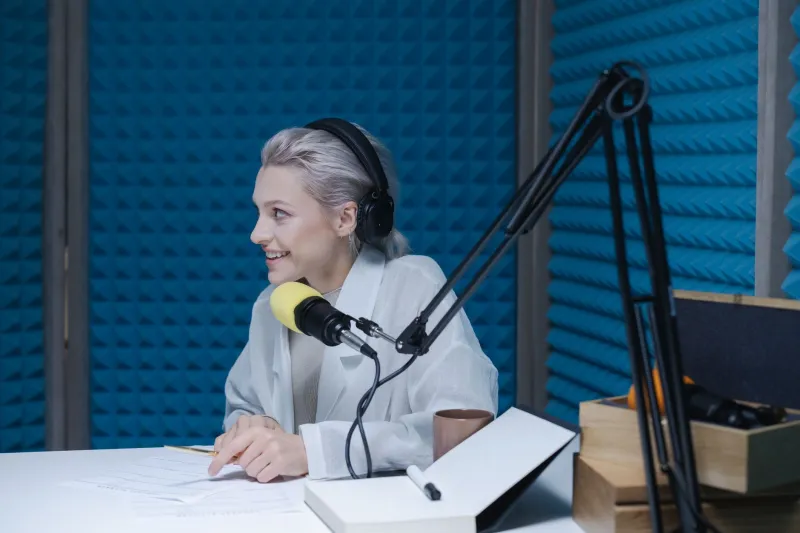
There's a moment, somewhere between the third hour of a live show and the seventeenth caller of the day, when something shifts. The headphones feel heavier. The producer's cues blur. The voice that's carried a personality through years of live radio starts to feel borrowed — like it belongs to someone else entirely.
For a surprising number of talk radio's most successful hosts, that moment isn't a bad day. It's a decision point. And more of them than you'd expect are choosing to walk away.
This isn't about getting fired, losing ratings, or falling out of favor with station management. We're talking about hosts at the absolute top of their game — syndicated shows, major market slots, loyal audiences in the millions — choosing to go quiet. Voluntarily. Sometimes without much explanation at all.
So what's actually going on?
The Weight Nobody Talks About
Here's the thing about talk radio that doesn't make it into the career brochure: you are always on. Not just during the show. Always.
When a television anchor wraps a segment, they go home. When a podcast host finishes recording, they close the session. But a live talk radio host exists in a kind of permanent performance state. Listeners form deep, almost parasocial attachments. They call in. They email. They recognize voices at the grocery store and expect the same energy they hear every morning during their commute.
Industry veterans describe it as carrying a character around with you twenty-four hours a day. The host persona doesn't clock out. And over time, that gap between the person behind the mic and the voice millions of people think they know can become a chasm that's genuinely hard to bridge.
Former mid-market host Dana Reardon — who spent eleven years building a loyal afternoon drive audience in the Southeast before stepping away at 44 — put it plainly in a recent conversation with colleagues that made the rounds in industry circles: "The audience owns a version of you. And eventually you start to wonder if the real version has any room left."
When Money Stops Being the Answer
The financial argument for staying is obvious. Syndication deals, endorsement partnerships, speaking engagements — a successful talk radio host in the US can build a genuinely lucrative career. And that's precisely what makes the departures so striking.
These aren't hosts leaving because the money ran out. In many cases, they're leaving despite the money being very, very good.
What researchers who study media burnout — and yes, that's a real field now — have started to document is that sustained live performance work creates a specific kind of psychological fatigue that financial compensation doesn't touch. You can deposit a check. You can't deposit rest.
The always-on nature of talk radio is compounded by the emotional labor involved. Hosts aren't just filling airtime. They're managing callers in crisis, navigating politically charged conversations, absorbing listener grief and anger and joy in real time, and then pivoting to a commercial break with a smile in their voice. Do that for a decade and the cumulative weight becomes something most listeners never see coming.
And the audience? They're often the last to know anything is wrong. The host sounds great right up until the day they don't show up.
The Myth of the Gradual Exit
In most industries, a peak performer easing toward the door leaves behind a trail of signals. Declining output. Missed deadlines. A slow fade.
Talk radio doesn't work that way. The format demands full commitment every single day. You can't phone it in — literally or figuratively — when millions of people are listening live. So hosts tend to perform at their highest level right up until the moment they stop performing entirely.
This creates a jarring disconnect for audiences and industry observers alike. From the outside, everything looks fine. The numbers are solid. The show sounds great. And then the host announces they're done, and the whole industry scrambles to understand what happened.
What happened, in many cases, is that the decision was made months earlier. The final broadcast was just the last in a long line of shows that the host was already mentally finished with.
Long-time radio consultant Marcus Briley, who has worked with major market stations across the Midwest and Southeast, describes it as a pattern he's seen accelerate over the past decade. "The hosts who are most committed to the craft are often the ones who burn out the fastest," he says. "They don't half-ass anything. So when they hit the wall, they hit it at full speed."
What the Departures Are Really Saying
There's a broader conversation hiding inside these individual stories, and it's one the radio industry hasn't been entirely willing to have.
The always-on media model — the one that demands perpetual availability, constant content, and an unbroken emotional connection with the audience — may be fundamentally unsustainable for the humans at its center. Streaming platforms, social media, and the relentless appetite for fresh content have only intensified the pressure on live hosts who were already operating at the edge of what's humanly manageable.
Talk radio built its identity on authenticity. Real voices. Real conversations. Real connection. But authenticity has a cost, and the industry has historically been reluctant to acknowledge it.
When successful hosts walk away, they're not just making personal decisions. They're sending a signal about the conditions they were operating in. And the fact that so many of them cite similar themes — the erosion of personal identity, the inability to separate from the persona, the exhaustion of being emotionally available to strangers every single day — suggests something structural, not just individual.
Life After the Booth
Here's the part that surprises people: most of the hosts who walk away don't regret it.
Some transition into consulting or production work, staying connected to the medium without carrying its full weight. Others disappear from the industry entirely, trading the microphone for a quieter life that their audiences would barely recognize. A few come back, eventually, but often in a different format — a limited podcast run, a weekend show, something with boundaries that broadcast radio rarely allows.
What they share, almost universally, is a sense of having reclaimed something. The version of themselves that existed before the persona took over. The ability to have a conversation without performing it.
Dana Reardon, who now consults for a regional media group and hosts a low-key podcast that she describes as "just talking, no stakes," says the silence after leaving was the hardest part — and then the most valuable. "You spend so long filling every second of dead air that you forget silence is actually something," she said. "It took me about eight months to stop feeling guilty about it."
For an industry built on the power of the human voice, that might be the most honest thing anyone has said in a long time.