Down But Never Out: The Radio Hosts Who Clawed Their Way Back to the Mic

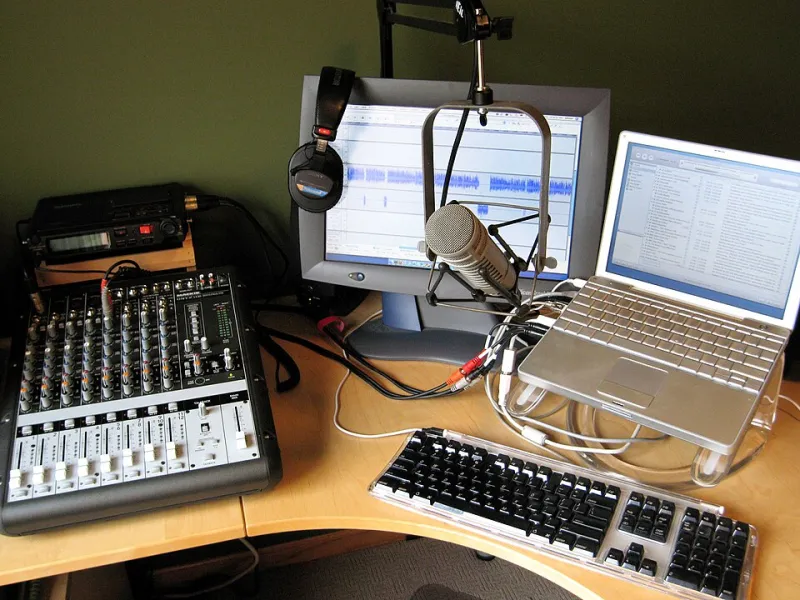
Photo: Sieghardpaw, CC BY-SA 4.0, via Wikimedia Commons
Talk radio has always been a contact sport. Hosts say the wrong thing, back the wrong horse, or just catch the industry at a bad moment — and suddenly the mic goes cold. But here's what makes this medium genuinely different from almost every other corner of entertainment: the audience has a long memory, and sometimes that works in your favor.
At All Talk Radio, we've spent a lot of time in the weeds of this industry, and one theme keeps surfacing in conversation after conversation with working hosts: the comeback isn't just possible in talk radio — it's practically a tradition.
When the Mic Cuts Out
Every veteran broadcaster has a story about the floor dropping out. Maybe it was a comment that spiraled out of context. Maybe a format change killed a show that had real momentum. Maybe a station sale wiped out an entire lineup overnight. The industry is notoriously unforgiving in the short term, but strangely forgiving over time.
Mike Slater, a conservative talk host who's bounced between markets and formats over the years, puts it bluntly: "The audience doesn't forget you. They might be mad at you for a while, but if you were real with them — if they felt like they actually knew you — they come back around."
That word keeps coming up. Real. It's not a marketing term in this context. It's the actual currency of the format.
The Shock Jock Redemption Playbook
Howard Stern's career arc is probably the most studied example in the business. Fined repeatedly by the FCC, dropped by stations, declared dead by industry insiders more than once — and yet he's still one of the most-listened-to voices in American audio. His move to SiriusXM in 2006 wasn't just a business decision; it was a reset that let him evolve without the constraints that had defined (and occasionally derailed) his earlier career.
What's instructive about Stern isn't the controversy itself — it's what he did after each wave of backlash. He leaned harder into the interview format, creating some of the most genuinely probing celebrity conversations American radio has ever produced. He didn't run from his past; he used it as context.
That pattern — using the controversy as connective tissue rather than trying to erase it — shows up again and again among hosts who successfully rebuild.
Political Hosts and the Loyalty Factor
On the political talk side, the calculus is a little different. Hosts who stake out ideological ground tend to build audiences that are deeply tribal in the best sense — loyal, engaged, and willing to follow a voice across platforms and formats.
Take Don Imus, whose 2007 controversy over comments about the Rutgers women's basketball team got him fired from MSNBC and CBS Radio simultaneously. By most measures, that should have been a career-ending moment. But within months, he was back on the air at WABC in New York, and his audience followed him almost immediately.
The reason, according to longtime radio consultant Holland Cooke, comes down to parasocial relationship-building. "Talk radio listeners invest in a host differently than TV viewers invest in an anchor," Cooke has said in industry discussions. "They've been in the car with this person for years. That relationship doesn't evaporate because of a news cycle."
The Streaming Era Changes the Equation
What's shifted dramatically in the last decade is the infrastructure available to a host who's been pushed out of traditional broadcasting. Podcasting and streaming platforms have essentially created a parallel universe where a fired host can be back in front of their audience within days — sometimes hours.
That's not hypothetical. Several hosts who lost terrestrial radio gigs during the consolidation waves of the 2010s quietly built podcast audiences that eventually rivaled their old broadcast numbers. The gate-keeping function that once made a station firing genuinely career-threatening has been significantly weakened.
For All Talk Radio, that's actually central to what we're building. The idea that real conversation — unscripted, unfiltered, driven by genuine human dynamics — can find its audience regardless of whether a traditional broadcaster is involved. The hosts who've made comebacks in the streaming era almost universally credit one thing: they stopped trying to be what the industry wanted and started being what their listeners needed.
What Resilience Actually Looks Like
Spend enough time talking to working radio hosts and you start to notice a pattern in how the successful ones describe their lowest moments. Almost none of them frame the setback as something that happened to them. They frame it as something they had to work through — and the working-through almost always involved getting back to basics.
For some, that meant doing smaller market shows or filling in on overnight shifts. For others, it meant launching a podcast with zero production budget and rebuilding an audience from scratch. What they almost never did was go silent.
Jennifer Steele, a Bay Area radio host who navigated a format flip that eliminated her show, describes it this way: "I did a podcast out of my closet for eight months. Like, literally a closet. But my listeners knew where to find me, and they showed up. That's when I understood what this job actually is. It's not about the station. It's about the conversation."
The Second Act Is Often the Better Story
There's something almost structurally built into talk radio that makes second acts possible in a way that other media formats don't quite replicate. The format rewards authenticity over polish, and a host who's been through something — who has actual scars — often becomes more compelling, not less.
Listeners can hear the difference between someone performing confidence and someone who's genuinely earned it. A host who's been fired, dragged through the press, and came back anyway carries a kind of credibility that no amount of media training can manufacture.
At All Talk Radio, we'd argue that's the whole point. Real voices, real conversations — and sometimes, real redemption. The mic always comes back on eventually. The hosts who understand that are the ones worth listening to.