The Regular Caller Problem: What Happens When Your Biggest Fan Won't Stop Dialing
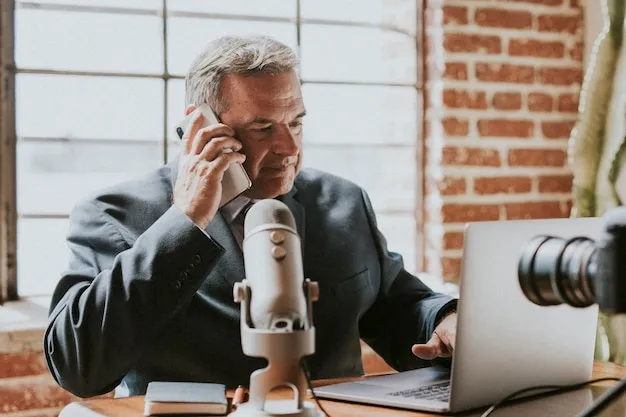
Photo: radio host answering phone call in studio, via img.freepik.com
The Voice You Already Know
Somewhere in suburban Ohio, a guy named Dave has called the same afternoon drive show every Tuesday for the better part of six years. He's got a bit — a predictable setup, a familiar laugh, a pet topic about local zoning laws that somehow never gets old. The hosts know his voice before he finishes saying his name. The producer has a color-coded note next to his number in the screening system.
Dave is beloved. Dave is also, depending on who you ask, a mild operational headache.
"There's a real tension there," says one afternoon drive producer at a mid-market station in the Midwest who asked not to be named. "Regular callers are gold in some ways. They make the show feel alive, like a community. But if you let them on every single time, you're basically handing part of your show to someone who doesn't work there."
This is the repeat caller problem — and it's one of the quieter, more human-sized challenges in talk radio today.
When Familiarity Becomes a Format
Talk radio has always thrived on the illusion of intimacy. A host who sounds like your neighbor, a studio that feels like a kitchen table conversation — these are deliberate design choices. And regular callers feed directly into that ecosystem. They become recurring characters in an ongoing story, the kind of voices listeners recognize and look forward to.
In some cases, repeat callers have actually become part of the brand. Sports talk stations in particular have leaned into this, letting devoted fans evolve into unofficial co-commentators. Political shows have their own version — the caller who reliably represents a certain point of view so cleanly that producers almost use them as a temperature gauge for the broader audience.
But here's where it gets complicated. The same quality that makes a regular caller entertaining — their consistency, their passion, their willingness to keep showing up — can curdle into something harder to manage. Dependency. Entitlement. A slow drift from "engaged listener" toward something that looks more like a parasocial relationship with the show itself.
"We had a woman who called our evening program three, four times a week for almost two years," recalls a program director at a talk station on the East Coast. "She was great on air, genuinely funny. But she started getting upset when we didn't put her through. Like, actually upset — leaving messages saying we were ignoring her. That's when it stops being charming."
The Screening Room's Dirty Secret
Producers are the unsung gatekeepers in all of this. They're the ones who see a familiar number pop up and have to make a split-second call: does this person add something today, or are we just letting them on out of habit?
Most stations have informal policies about repeat callers — some as loose as "use your judgment," others more structured. A few larger operations have started tracking call frequency in their screening software, flagging numbers that come up more than a certain number of times per month. It's not about banning anyone. It's about keeping the show from calcifying around the same five voices.
"The worst thing you can do is let a show become a private club," says one veteran call screener with over a decade at a national syndicated program. "New listeners tune in and if they keep hearing the same people, it sends a signal — this isn't for me. The regulars don't realize they can actually shrink the audience just by showing up too much."
The irony is thick. The most devoted fans of a show can inadvertently become a barrier to its growth.
What Hosts Actually Feel
Ask a talk radio host about their most memorable callers and you'll usually get a warm answer. Ask them about their most frequent callers and the response gets more nuanced.
There's genuine affection, often. Hosts do develop something real with the voices they hear repeatedly — a recognition that goes beyond professionalism. Some describe it like running into a regular at a coffee shop. You're happy to see them. You just don't necessarily want them at your table every morning.
"I think about their lives sometimes," admits one longtime afternoon host in the Southeast. "Like, what's going on with this person that calling my show is such a big part of their week? I don't mean that in a dismissive way. I mean it sincerely. Sometimes I wonder if we're filling a gap for them that maybe we shouldn't be the ones filling."
That question — what role is a radio show actually playing in a regular caller's life — sits at the heart of the whole conversation. Talk radio is built on connection. But connection has gradations, and the medium doesn't always make those gradations clear to the people who call in.
Managing the Relationship Without Killing It
So what do stations actually do? The approaches vary, but a few strategies come up consistently.
Some producers start rotating regular callers to specific segments rather than open lines — giving them a defined lane that feels like recognition without handing them unlimited access. Others have hosts acknowledge long-time callers on air in ways that gently signal appreciation without issuing an open invitation to call again next week.
A few stations have experimented with listener communities — Discord servers, Facebook groups, email newsletters — as a way to redirect the energy of highly engaged listeners toward spaces that don't clog up the phone lines. It's a partial solution at best, but it does seem to help.
What nobody wants to do is just cut someone off cold. That's bad radio karma, and more than that, it feels genuinely unkind. These are real people who care about the show. The goal is to honor that without letting it run the show.
"At the end of the day, we want people to feel like they belong," says the Midwest producer. "We just have to make sure everyone gets a seat — not just the folks who've been coming the longest."
Dave in Ohio still calls in on Tuesdays. The zoning law bit has evolved. The hosts still laugh. And the producer still has that color-coded note — except now it also says "every other week, max."
Some relationships need a little structure to stay healthy. Talk radio is no different.