First to Hear It: The Hidden Emotional Weight of Being a Talk Radio Call Screener
First to Hear It: The Hidden Emotional Weight of Being a Talk Radio Call Screeners
The phone rings. Someone on the other end wants to talk. Maybe they have an opinion about the news. Maybe they want to push a theory they've been sitting on for weeks. Maybe — and this happens more often than most people realize — they're in the middle of something serious, and the radio felt like the only place left to turn.
The first person who hears any of that isn't the host. It's the screener. And what that job does to a person is a conversation the talk radio industry has been quietly avoiding for a long time.
Thirty Seconds to Figure It Out
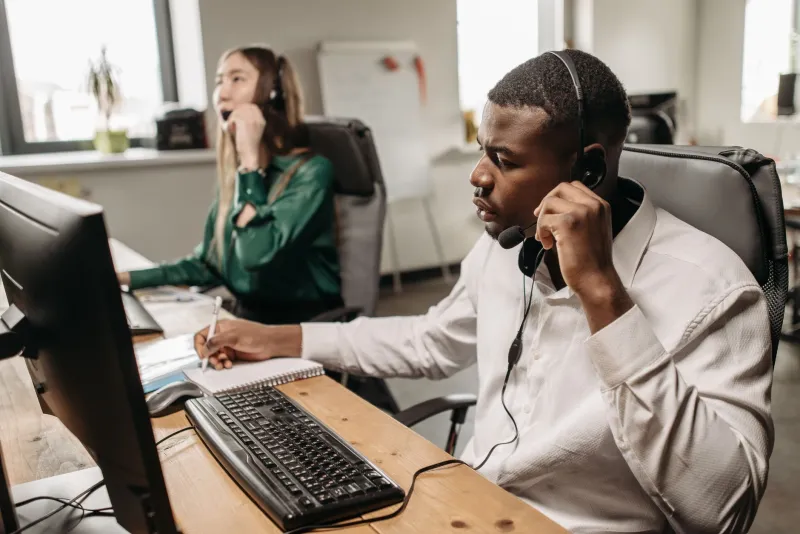
Call screening sounds simple on paper. Answer the phone, get a name, find out what the caller wants to talk about, decide whether they go on air. In practice, it's an exercise in rapid human assessment that most people are wildly unprepared for when they start.
Screeners are typically working with thirty seconds to a minute per call. In that window, they need to figure out whether someone is coherent, whether their point is relevant, whether they're going to be a good listen or a liability, and — critically — whether there's something happening beneath the surface that needs a different kind of attention.
"You learn to listen for things that aren't in the words," said one former screener who spent four years at a major talk station in the Midwest. "The pace of someone's breathing. Whether they're keeping it together or starting to lose it. Whether the anger sounds like passion or something scarier."
Most stations have written protocols — topics to avoid, types of callers to flag, language that triggers an automatic screen-out. But the actual screening happens in instinct and gut feeling more than any written guide. It's pattern recognition built from hundreds of calls a shift, thousands over a career.
What Gets Through and What Doesn't
The public conversation about talk radio call screening usually focuses on bias — the idea that screeners are filtering for ideological alignment or protecting hosts from uncomfortable challenges. That happens. Anyone who tells you otherwise isn't being straight with you.
But the more common screening decisions are a lot less dramatic and a lot more human. Is this person going to make good radio? Can they hold a thought? Are they calling about what they say they're calling about, or is there something else going on?
The "something else going on" category is where screeners earn their keep — and where the job starts to accumulate weight.
Screeners regularly encounter callers who are in crisis. People who have dialed a radio station because they don't know where else to call. People who start a sentence about a news story and end it somewhere much darker. People who are clearly not okay and who, for whatever reason, reached for the radio dial instead of a helpline.
"I had a woman call in during a segment about healthcare policy," one screener recalled. "She started talking about insurance, and within a minute it was clear she was describing something that was happening to her right now, and she was not in a good place. We had to make a decision fast about what to do with that call."
What happens next depends on the station, the show, the producer on duty, and the screener's own judgment. Some calls get redirected to resources. Some are held and handled off-air. Some, in the chaos of a live show, slip through in ways that create complicated moments for everyone involved.
The Stuff That Sticks
Ask a screener what the hardest part of the job is and they'll rarely say the volume of calls or the pace of the work. They'll tell you about specific calls. The ones that stayed.
This is the part of the screener experience that the industry almost never acknowledges: the cumulative emotional exposure. Screeners hear a cross-section of American anxiety, anger, grief, and confusion every single shift. They process it in real time, move on to the next call, and do it all again. There's rarely any formal support structure for what that does to a person over time.
"Nobody really talks about the fact that you're absorbing a lot," said one screener who left the role after two years. "You hear someone crying and you have to stay professional and move fast. You hear something that genuinely worries you and you have to make a call in thirty seconds. And then the shift ends and you go home and it's just... there."
The parallels to other frontline roles — emergency dispatchers, crisis hotline workers — are real, but the support systems that exist in those fields largely don't translate to radio. Screeners are often young, often underpaid, and often completely on their own when it comes to processing what the job brings.
A Role Worth Taking Seriously
There's a case to be made that call screeners are doing some of the most undervalued work in American media. They are, in a very literal sense, the gatekeepers of public conversation. What they let through shapes what millions of people hear. What they flag or redirect can, in some cases, make a real difference in someone's life.
That's not a small thing. It deserves more attention than it gets — from station management, from the industry at large, and from listeners who assume the call-in process is simple because it sounds that way on air.
At All Talk Radio, we believe in the full picture of how radio gets made. And the screener's chair is a big part of that picture — even when nobody's talking about it.