Mic Check, One Two: How a New Wave of DIY Creators Is Rewriting the Rules of Talk Radio
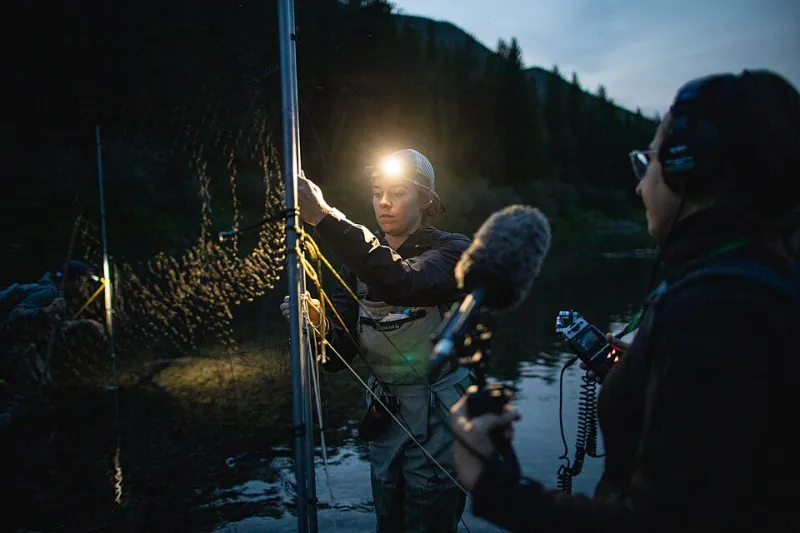
Photo: GlacierNPS, Public domain, via Wikimedia Commons
Jamila Okonkwo launched her podcast with a $79 USB microphone, a blanket draped over a clothing rack for soundproofing, and exactly zero industry connections. Eighteen months later, her show — a hyperlocal deep-dive into Atlanta's affordable housing crisis — has more than 40,000 regular listeners, a Patreon that covers her rent, and a standing invitation to present findings to the city council.
She is not an anomaly. She is the template.
Across the country, a generation of independent podcasters and micro-broadcasters is doing something that would have seemed impossible fifteen years ago: building real, sustainable media businesses from scratch, on their own terms, without ever pitching a single network executive.
The Gatekeepers Are Gone (Mostly)
Traditional talk radio had a famously high barrier to entry. You needed a station. A station needed an FCC license. A license required capital, connections, and a lot of patience. The result was a medium dominated by a handful of major players — iHeartMedia, Cumulus, Audacy — who controlled what voices got amplified and which ones didn't.
The podcast revolution didn't just add new voices. It fundamentally restructured who gets to decide which conversations are worth having.
"I pitched three local news stations with my housing coverage and got zero responses," Okonkwo recalls. "So I just started the show. Within six months I had more listeners than most of those stations' podcast feeds. The gatekeepers lost their gate."
The numbers back her up. As of 2024, there are more than four million active podcasts worldwide, with the United States accounting for the largest share of both creators and listeners. The Interactive Advertising Bureau estimates the U.S. podcast advertising market will clear $2 billion this year. Independent creators are capturing a growing slice of that.
The Gear Is Cheap. The Authenticity Is Free.
One of the most persistent myths about media production is that quality requires expensive equipment. Today's DIY creators are systematically dismantling that idea.
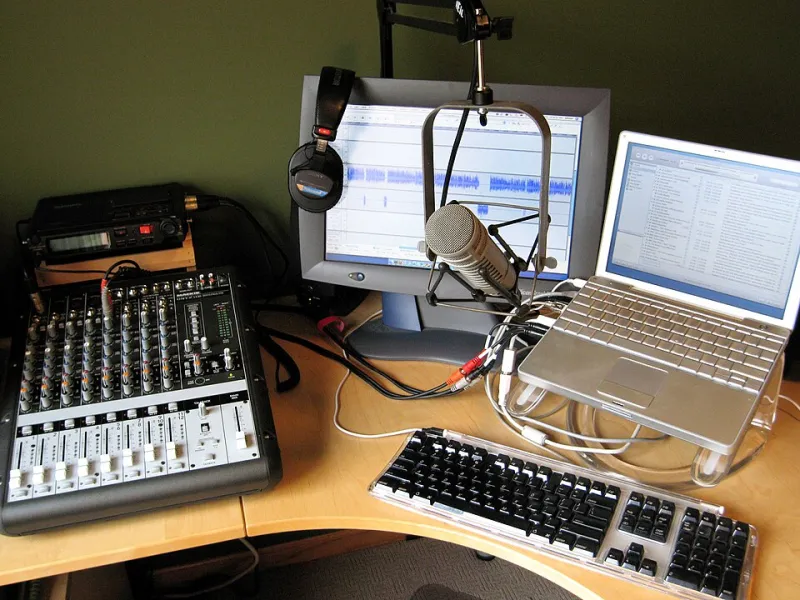
Take the setup that's become something of an industry standard for bedroom podcasters: a Shure SM7B or a comparable dynamic microphone (under $400), a basic USB audio interface, free or low-cost recording software like Audacity or GarageBand, and a quiet room with soft furnishings to absorb echo. Total investment: under $600. That's less than a single month's advertising budget for a mid-market radio station.
The more important currency, creators say, isn't money — it's trust.
"My listeners know I'm not beholden to advertisers in the way a traditional station is," says Derek Fontaine, who runs a nerd culture debate show out of his apartment in Columbus, Ohio. His show, which covers everything from comic book continuity arguments to the ethics of video game monetization, pulls in around 25,000 downloads per episode. "When I say something, they know it's what I actually think. You can't buy that credibility. You have to earn it, conversation by conversation."
Fontaine's community has grown well beyond passive listenership. His Discord server has more than 8,000 members who debate the week's topics between episodes. He hosts live watch-along streams. He's turned a hobby into a career — not by mimicking what traditional radio does, but by doing something it structurally can't: being genuinely, messily himself.
Hyperlocal and Underrepresented: Filling the Gaps
Some of the most compelling work happening in independent talk audio isn't about pop culture or political commentary — it's about the communities that legacy media has chronically underserved.
In Fresno, California, a bilingual podcast called La Voz del Valle covers agricultural labor issues and immigration news for the Central Valley's Latino farmworker community. In rural Appalachia, a show run by a former coal miner explores economic transition and mental health in communities gutted by industry decline. In Minneapolis, a Black women's collective produces a weekly roundtable on health equity, local politics, and culture that has attracted national sponsorship while remaining firmly rooted in its neighborhood.
These shows aren't trying to be NPR. They're filling specific gaps that NPR — with its national mandate and institutional constraints — simply can't fill.
"There's no version of a major network that was ever going to make a show specifically for middle-aged Hmong women in St. Paul who care about local school board elections," says media analyst Carla Brennan, who tracks independent audio at a digital media consultancy in New York. "But someone from that community can. And they can build an audience that is intensely loyal in a way that a general-interest show never achieves."
Brennan calls this the "specificity paradox" — the more narrowly defined a show's focus, the more deeply it connects with the people it's made for. In an age of content abundance, niche isn't a limitation. It's a superpower.
The Business of Talking
Building an audience is one challenge. Building a sustainable income from that audience is another. But independent creators have developed a toolkit that didn't exist a decade ago.
Patreon and Substack allow direct listener support. Dynamic ad insertion technology lets small shows run targeted advertising without a sales team. Merchandise, live events, and premium content tiers have all become viable revenue streams for shows with engaged communities. Some creators are even licensing their content to traditional broadcasters — the very institutions that once held all the cards.
"I turned down a network deal last year," Fontaine says, not without some pride. "They wanted editorial input and exclusivity. I make more money with full independence. That sentence would have been science fiction ten years ago."
What This Means for Talk Radio's Future
The traditional radio industry isn't dead — but it's watching its audience age and its advertising dollars migrate, and the smartest players know it. Several major networks have quietly pivoted to acquiring successful independent podcasts rather than developing original content in-house, essentially outsourcing their innovation to the bedroom studios they once ignored.
For listeners, this is an almost entirely good story. More voices. More specificity. More authentic conversations about the things that actually matter to real communities. The talk radio landscape of 2024 is noisier, messier, and infinitely richer than it was even five years ago.
For the creators themselves, the message is simpler: the mic is available. The audience is waiting. You don't need anyone's permission to start the conversation.
Jamila Okonkwo's blanket-and-clothing-rack studio is a little more sophisticated these days — she upgraded to acoustic foam panels in month four. But she still records in her apartment. Still owns every episode. Still answers every listener email herself.
"This is what talk radio was always supposed to be," she says. "Real people, real conversations. The technology just finally caught up with the idea."