No Campus, No Connections, No Problem: How Talk Radio's New Voices Found Their Own Way In
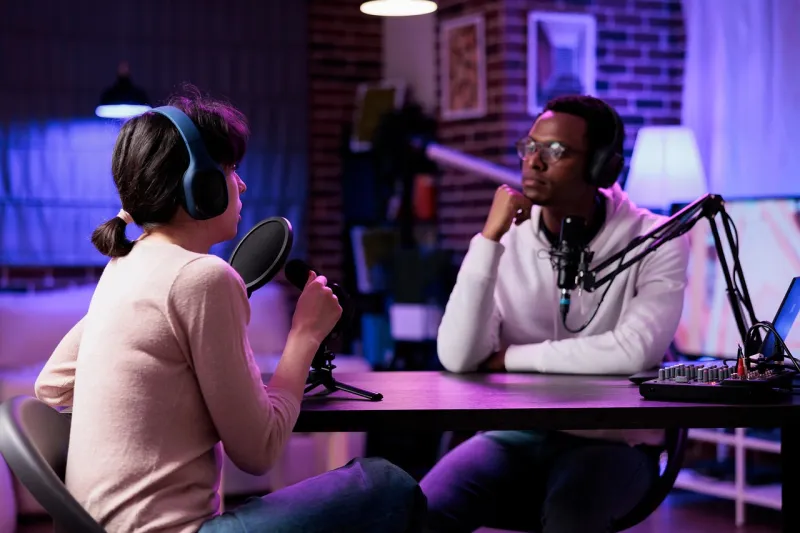
Photo: podcast host recording in home studio setup, via cdn.pixabay.com
For decades, the path into talk radio looked pretty much the same. You went to school for broadcasting, got your feet wet at a college station, scraped together experience at some small market affiliate in a city you'd never planned on living in, and slowly—if you were talented and lucky and relentless—worked your way toward something bigger. It was a system built on patience and geography.
That system still exists. But it's no longer the only road in. Not even close.
The Old Gate Is Getting New Hinges
Walk through the production lineup of any major podcast network or talk radio group today and you'll start noticing something: a lot of the newer faces didn't take the traditional route. They came from somewhere else entirely—YouTube channels, Reddit communities, niche newsletters, or just a microphone propped up on a pile of books in a spare bedroom.
What changed? A few things converged at once. Podcasting lowered the barrier to entry so dramatically that almost anyone with something worth saying could build an audience without institutional support. Social media created direct lines between personalities and listeners, cutting out the middlemen who once controlled access. And audiences—particularly younger ones—started following people rather than stations.
"We used to look for someone who already knew how to operate in a radio environment," says one programming director at a mid-sized AM/FM talk network who has been in the industry for over two decades. "Now we look for someone who already has a relationship with an audience. The technical stuff we can teach. The connection? You either have it or you don't."
From Subreddit to Syndication
Take the story of Priya, a 31-year-old host who now anchors an afternoon talk block in a top-twenty market. Her origin story doesn't include a single broadcasting class. What it does include is six years of moderating a personal finance community online, a podcast she started almost as an afterthought, and a dedicated audience that had grown to nearly 200,000 subscribers before she ever spoke to a radio executive.
"I wasn't trying to get into radio," she says, laughing. "I was just trying to answer questions people kept asking me. And then one day someone reached out and said, 'Have you ever thought about doing this on the radio?' And honestly? I hadn't."
Her case isn't unusual anymore. The pattern—build an audience around a specific topic or perspective, attract attention from traditional media, make the jump—is becoming one of the more reliable entry points into the industry.
The niche is often the point. Where old-school talk radio prized broad appeal, the new wave frequently starts with depth. A host who owns a particular subject—true crime, local politics, financial literacy, sports analytics—brings a pre-built community that a station can tap into. That's a different kind of value than what a fresh broadcasting graduate can offer.
What Talent Scouts Are Actually Looking For Now
Spend any time talking to the people who identify and develop new talk talent, and a few themes keep surfacing. Authenticity is at the top of almost every list. So is the ability to listen—genuinely, actively listen—rather than just wait for a turn to talk.
"The biggest mistake I see from people who've built audiences online is they're used to being the whole show," says a talent development consultant who works with several podcast-to-radio crossover projects. "Radio is a conversation. Even when you're solo, you're talking with your audience, not at them. That's a skill some people have naturally and some people have to learn."
Other qualities that keep coming up: comfort with silence (surprisingly rare), the ability to recover gracefully when something doesn't land, and genuine curiosity about the people they're talking to. That last one matters especially for call-in formats, where a host's willingness to be surprised by a caller is often what separates compelling radio from a lecture with phone interruptions.
The Social-to-Audio Pipeline
Another emerging pathway worth watching is the social media host who discovers that their audience wants to hear them—not just read their posts or watch their clips. Several current talk personalities trace their radio careers back to a moment when their followers started asking for more.
Derek, a 27-year-old sports talk host in the Southeast, had spent three years building a following around hyper-local college football commentary before a regional station approached him. "My DMs were full of people saying, 'You should do a podcast.' And then the station reached out and said, 'You should come do afternoons.' It felt like the audience was dragging me there."
That audience-pull dynamic is significant. Historically, radio stations found talent and then built audiences around them. Increasingly, it's working in reverse: audiences find personalities, and radio stations come looking for both.
Not Without Its Friction
It's worth being honest that this shift isn't entirely smooth. The traditional broadcasting pipeline existed for reasons—it trained people on equipment, taught them FCC compliance, gave them reps in low-stakes environments before putting them in front of large audiences. Some of that institutional knowledge is genuinely valuable, and not every social media star translates naturally to a live, regulated broadcast environment.
There have been stumbles. Hosts who were magnetic online but stiff on-air. Personalities whose content worked beautifully in the unedited podcast format but struggled within the structure of scheduled programming. The learning curve is real.
But the industry's appetite for fresh voices—voices that come pre-attached to communities, voices that sound like actual people rather than broadcasting school archetypes—seems to be outweighing the friction. Stations are building out more robust onboarding for non-traditional hires. Podcast networks are serving as de facto training grounds. The system is adapting.
The Bedroom Stays in the Story
Ask almost any of these new-path hosts about where they started, and they'll mention the spare bedroom. The closet with acoustic foam stapled to the walls. The USB microphone that cost $89 and changed everything. There's a specific kind of pride in that origin story—the bootstrapped beginning that no one handed them.
For listeners, that backstory matters too. In an era when authenticity is the scarcest commodity in media, knowing that a host clawed their way in from a standing start—with no alumni connections, no market pedigree, just something worth saying and the stubbornness to keep saying it—creates a different kind of trust.
The path into talk radio is wider than it's ever been. And if you've got the voice and the audience and the drive, the door is open in ways it simply wasn't a decade ago.