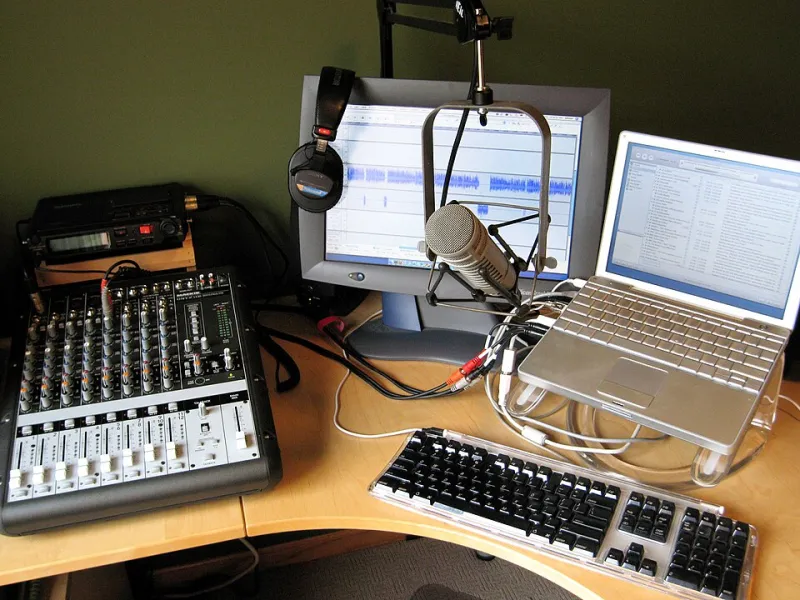
Pick Up the Phone: The Messy, Magnetic Pull of Live Call-In Radio
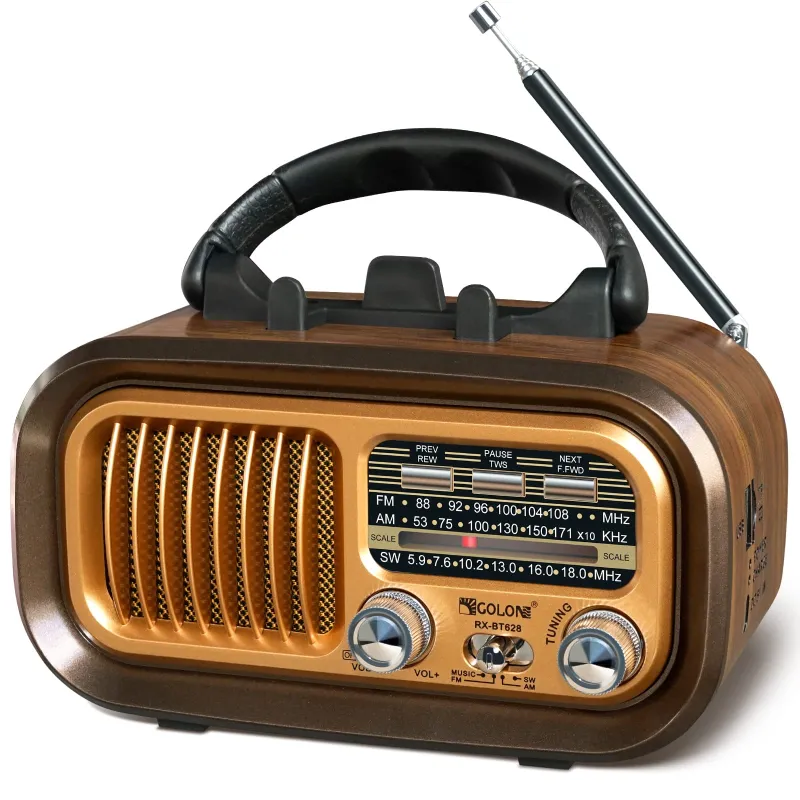
Photo: radio host taking live phone call in studio, via m.media-amazon.com
Here's a scenario: You've got an entire streaming library at your fingertips. Thousands of podcast episodes, curated playlists, documentaries, whatever you want. And yet, you're sitting in your car at 7:43 in the morning, completely locked in on a live call-in show, waiting to hear how the host is going to handle whatever that guy from Cincinnati just said.
You're not alone. Not even close.
Despite every technological convenience pushing us toward on-demand content, live call-in radio retains a grip on American audiences that algorithms simply cannot replicate. The question worth asking is: why?
The Thrill Is in the Not-Knowing
There's a term behavioral psychologists use called "variable reward scheduling." It's the same mechanism behind slot machines and social media feeds—the idea that unpredictable rewards are more compelling than predictable ones. Live call-in radio is basically that concept with a microphone and a seven-second delay.
When a caller gets put through, nobody—not the host, not the producer, not the audience—knows exactly where it's going. Maybe the caller makes a sharp point. Maybe they completely lose their train of thought. Maybe they say something so unexpectedly funny or heartbreaking that the whole segment shifts. That uncertainty isn't a flaw in the format. It's the feature.
"I've listened to the same morning show for eleven years," says Donna, a 54-year-old listener from outside Columbus, Ohio. "I have favorite podcast episodes I've listened to three or four times. But the show? I won't skip a single live segment. Because you genuinely never know."
That sentiment comes up again and again when you talk to longtime call-in radio fans. The on-demand world offers comfort and control. Live radio offers something rarer: genuine surprise.
What the People Behind the Glass Know
Call screeners—those unsung gatekeepers who decide which voices actually make it to air—have a front-row seat to the chaos. And most of them will tell you the unpredictability is exactly why their job matters.
"My whole thing is reading energy," explains Marcus, who has screened calls for a syndicated talk program for going on eight years. "You get a sense pretty fast whether someone's going to add something to the conversation or just repeat what the host already said. But even when I think I know? Sometimes I'm totally wrong. That's what keeps it interesting."
Screeners are essentially casting directors for a show that rewrites itself every single day. They're filtering for authenticity, for tension, for perspective the host hasn't already covered. And the best ones know that a little unpredictability—a caller who goes slightly off-script—often makes for better radio than a perfectly packaged opinion.
For hosts, managing that unpredictability is both the hardest and most rewarding part of the job. "Podcasting is great, I love it, but it's controlled," says one syndicated afternoon host who asked not to be named. "Live call-in is jazz. You've got a structure, sure. But you're improvising constantly, and the audience knows it. That's the contract."
Real-Time Connection in a Delayed World
There's something else going on beyond the thrill factor, though. Live radio creates a shared experience in a media landscape that has become almost entirely personalized.
When you're streaming a podcast, you're in your own bubble. You might share a clip later, but the experience of listening is solitary. Live call-in radio, even when you're alone in your car or your kitchen, puts you in the same moment as thousands of other people. You're all hearing the same caller, reacting in real time, maybe even picking up the phone yourself.
That communal element is something social media promised and largely failed to deliver in any meaningful way. Comment sections are chaotic and often toxic. Live radio has a structure—a host who moderates, a format that guides the conversation—but it still feels participatory in a way that recorded content just doesn't.
"I called in once, about four years ago," says James, a 38-year-old listener from Atlanta. "Didn't even say anything that groundbreaking. But I still think about it. I was on the show. There's something about that."
Hosts Who Live for the Chaos
Not every host is built for call-in radio. It requires a specific kind of mental agility—the ability to listen deeply while simultaneously thinking about where to steer the conversation, all while keeping an audience engaged. There's no safety net of a pre-recorded edit. Whatever happens, happens.
The hosts who thrive in that environment tend to share a common trait: genuine curiosity. They're not just waiting for callers to stop talking so they can make their next point. They're actually interested in what's coming through the line, even when—especially when—it challenges them.
That curiosity is contagious. Listeners can hear the difference between a host who's genuinely engaged with a caller and one who's just tolerating them until the next commercial break. The former creates radio worth staying tuned for. The latter is just noise.
Why On-Demand Can't Fill This Particular Gap
None of this is a knock on podcasts or streaming audio. Those formats have expanded the conversation landscape in genuinely exciting ways. But they operate on a fundamentally different premise: everything is curated, edited, and delivered on your schedule.
Live call-in radio operates on the premise that right now, in this moment, something interesting might happen. And you don't want to miss it.
That's not nostalgia talking. That's a real psychological need—for shared experience, for genuine surprise, for the feeling that you're part of something unfolding in real time. In an on-demand world that gives you everything except the unexpected, live radio keeps one very compelling promise.
You never know who's going to call next.