Why Your Favorite Host Feels Like Family (Even Though They Have No Idea You Exist)
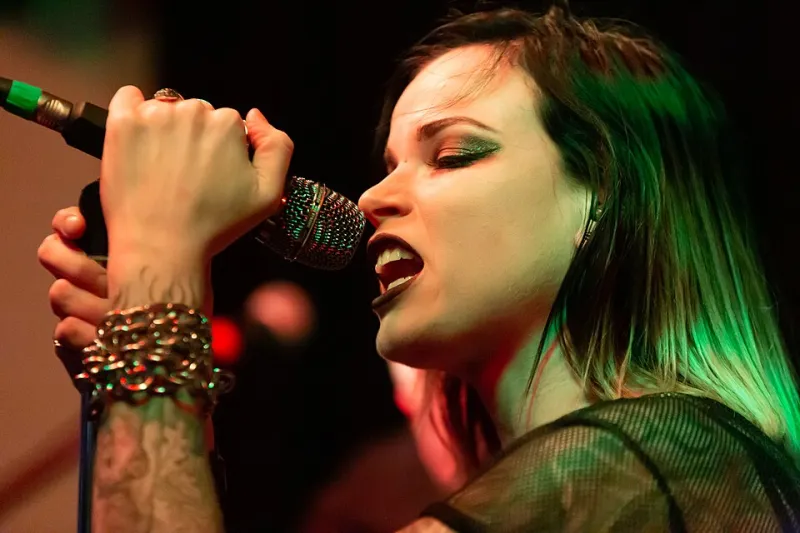
Photo: Steffen Prößdorf, CC BY-SA 4.0, via Wikimedia Commons
There's a particular kind of comfort that happens around 7:15 in the morning. You're stuck on the freeway, coffee going lukewarm in the cupholder, and then a familiar voice cuts through the static. It's the same cadence you've heard a thousand times. The same laugh. The same way they trail off before making a point. And somehow — even though you've never exchanged a single word — it feels like catching up with a friend.
That feeling has a name. Psychologists call it a parasocial relationship, a one-sided emotional bond where the listener invests real feelings into someone who doesn't know they exist. And while the concept has been studied since the 1950s, the explosion of talk radio and on-demand podcasting has turned what was once a niche psychological footnote into a defining feature of American social life.
The Voice Does Something a Screen Can't
It's worth asking why voice specifically creates this effect so powerfully. Video is everywhere. Social media offers near-constant access to personalities. Yet talk radio and podcast listeners consistently report stronger feelings of closeness toward their hosts than fans of YouTube creators or Instagram influencers.
Dr. Maya Renfield, a media psychologist who has spent years studying audio consumption habits, has a theory about that. "When you remove the visual element, your brain compensates," she explained in a recent conversation about listener behavior. "You fill in the blanks. You imagine a person, you assign them traits, you build a mental model that feels intimate because you constructed it. It becomes personal in a way that a face on a screen simply doesn't."
Voice also bypasses certain social defenses. When someone speaks directly into your ear — especially through earbuds — it mimics the physical proximity of genuine conversation. Your nervous system doesn't fully distinguish the difference. You lean in. You laugh. You nod along. The brain treats it as real social contact, even when rationally you know it isn't.
Loneliness as the Quiet Engine
Here's the uncomfortable part: the parasocial bond thrives in the soil of loneliness. And the United States has been growing that soil for decades.
According to data from the U.S. Surgeon General's office, nearly half of American adults report measurable feelings of loneliness on a regular basis. Social rituals that once anchored community life — the neighborhood church, the union hall, the bowling league — have steadily eroded. What's risen in their place, in part, is media consumption. And talk radio, with its conversational format and the illusion of dialogue, slides into that gap with uncanny precision.
Listeners themselves will tell you this plainly if you ask. Denise, a 54-year-old home health aide in rural Ohio, drives long stretches between clients with a talk show running continuously. "It's company," she said simply. "I'm not going to pretend it's something deeper than that. But it's real company. I know how he thinks. I know what makes him laugh. That matters when you're alone a lot."
That's not a pathology. That's adaptation. Humans are social animals finding creative workarounds in a social desert.
What Hosts Know (and How They Use It)
Experienced talk radio hosts understand this dynamic intuitively, even when they don't frame it in psychological terms. The best ones architect intimacy deliberately — sharing personal anecdotes, asking rhetorical questions that invite the listener to mentally respond, maintaining consistent verbal habits that become recognizable over time.
"I think about the person in the car," said one longtime afternoon drive host who has been broadcasting out of a Midwest market for nearly two decades. "Not 'my audience.' One person. I try to talk to that one person like we're having a real conversation. That's the whole game."
The call-in format takes this further. Even listeners who never pick up the phone feel included when they hear someone from their city, someone with their accent and their concerns, talking back to a host. The community becomes visible. The parasocial bond gets reinforced by proxy.
Podcasting amplified this with subscriber communities, Patreon tiers, Discord servers, and live events. The one-way relationship now has scaffolding around it that makes it feel, at least partially, mutual. Hosts learn listener names. They read feedback on air. The wall between broadcaster and audience has genuinely thinned — and with it, the parasocial relationship has evolved into something more complex.
When It Gets Complicated
None of this is without tension. Parasocial bonds can distort expectations. Listeners sometimes feel betrayed when a host takes a vacation, changes format, or expresses an opinion that doesn't match the mental model they've built. A host's public stumble — an offensive comment, a professional scandal — can hit devoted listeners with the emotional weight of a personal betrayal. Because in some very real neurological sense, it is.
There's also the question of what this does to our capacity for real-world connection. If the parasocial relationship is filling a social need, does it reduce the urgency to build actual community? Some researchers worry about exactly that feedback loop — that convenient, low-friction parasocial bonds make the harder work of genuine relationship-building feel less necessary.
Others push back. Dr. Renfield argues the relationship can work in both directions. "For many people, especially those who are isolated by geography, disability, or life circumstances, these bonds are a genuine lifeline. They maintain social cognition. They keep people feeling part of something larger than themselves. That has real value."
The Talk Radio Difference
What separates talk radio specifically from other parasocial media is the conversation format itself. Music radio creates mood. News radio delivers information. But talk radio — at its best — models human dialogue. It demonstrates how to disagree, how to laugh at something difficult, how to sit with an idea and turn it over. For listeners who feel starved of that kind of engagement in their daily lives, tuning in isn't just entertainment. It's a form of social practice.
That's the intimacy paradox in full: millions of Americans are having their most consistent, emotionally resonant social experiences with people who will never know their names. It says something about the medium. It says something about the hosts who master it. And it says quite a lot about the kind of connection we're all quietly hungry for.
The mic stays on. And we keep listening.