Talking for a Living: The Real Numbers Behind Building a Talk Radio Career in 2024
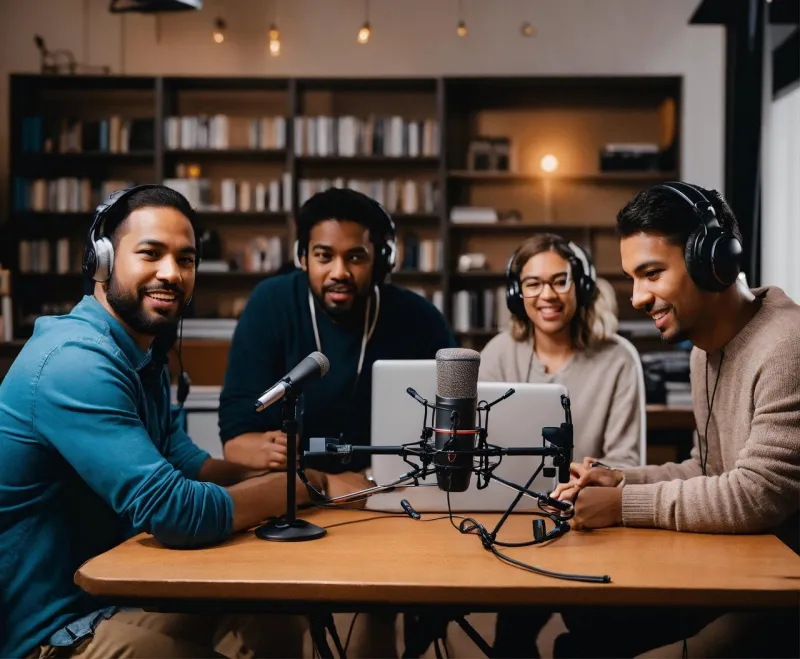
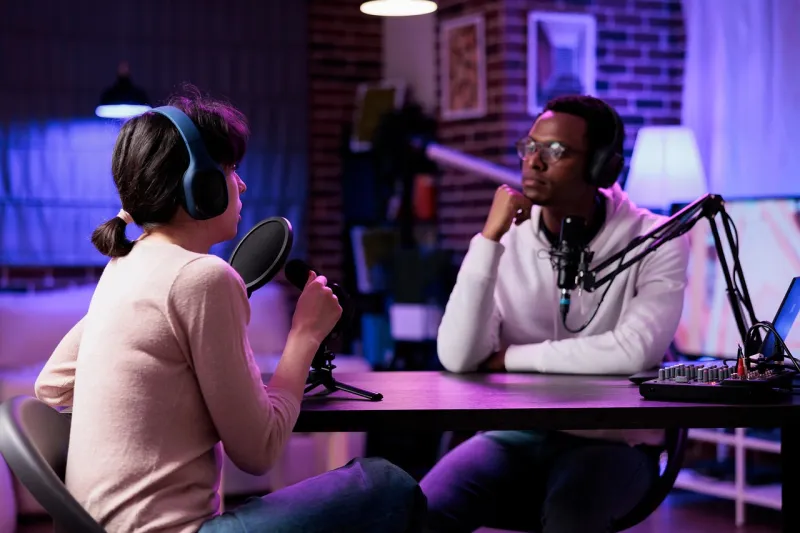
Photo: podcast host recording in home studio with microphone and headphones, via cdn.pixabay.com
Let's get the romantic version out of the way first: you get a great mic, you start talking, people find you, and eventually someone hands you a check. That's the fantasy. The reality is messier, slower, and honestly a lot more interesting — because the people who are actually making it work in 2024 are doing it through a combination of hustle, strategy, and a pretty clear-eyed understanding of what the business actually looks like right now.
Talk radio as a career path has fractured into a dozen different shapes. There's traditional terrestrial radio, which still pays and still reaches massive audiences but is increasingly competitive and consolidation-heavy. There's podcasting, which is essentially talk radio by another name and has its own complicated economics. And then there's the hybrid model — the one that's producing some of the most interesting success stories we're seeing — where independent creators build audiences across multiple platforms and monetize in layers.
We talked to four hosts at different stages of their careers to get a realistic picture of what building a sustainable talk radio career looks like in 2024. The numbers they shared are real. The timelines might surprise you.
Stage One: The Grind (Years 0–2)
Marcus Webb started his political commentary show out of a closet in his Chicago apartment in 2021. He'd foam-padded the walls himself with moving blankets. His equipment budget was around $400. For the first fourteen months, he made exactly nothing.
"I think people underestimate how long the runway actually is," he told us. "Everyone sees the hosts who blew up and they think that's the normal timeline. It's not. Most of us are grinding for a year or two before we see any real money."
Marcus's first meaningful revenue came from Patreon — he launched a listener support page about eight months in, when his show had roughly 2,200 regular listeners. At $5–10 per supporter, his initial cohort of 60 patrons was generating around $350 a month. Enough to upgrade his mic. Not enough to quit his day job.
The lesson from the early stage, Marcus says, is to treat every dollar of early revenue as infrastructure investment rather than income. Better audio quality, a real editing setup, maybe a part-time producer — these are the things that let you compete with shows that have actual budgets behind them.
Stage Two: The First Real Money (Years 2–4)
Kiesha Monroe has been hosting her true crime and social justice talk show for three and a half years. She's based in Atlanta, records out of a dedicated home studio, and crossed into full-time territory about eighteen months ago. Her revenue mix looks like this: roughly 40% from direct listener support (Patreon plus a paid newsletter), 35% from host-read sponsorships, and the remaining 25% from a combination of live events and consulting work she does for other podcasters.
"The sponsorship market is real, but it's relationship-driven," she explains. "My first deal came through a mutual connection — a host I'd been in community with for about a year introduced me to her ad rep. That's how it usually works. The brands that want authentic host-read ads are looking for trust, and trust takes time to build."
Kiesha's show averages around 28,000 downloads per episode. At current market rates for host-read mid-roll ads in her niche (roughly $18–25 CPM), a single episode with two ad reads can generate $1,000–$1,400. She publishes twice a week. Do the math and it's a real business — though she's quick to point out that sponsorship revenue is inconsistent. "You'll have a great quarter and then a sponsor pulls out and you're scrambling. The diversification isn't optional. It's survival."
Stage Three: Scaling Up
Dave Kowalski has been in talk radio in one form or another since 2009, but his independent career really started when he left a mid-market terrestrial station in 2019 to go out on his own. He hosts a daily sports talk show that's been syndicated to a network of regional stations, has a Patreon with over 800 paying members, and recently wrapped up a 14-city live tour.
The syndication piece is something a lot of newer creators overlook. "People think syndication is this old-school thing that doesn't matter anymore," Dave says. "But for talk radio specifically, there are still station groups actively looking for content they can license. The deal structures have changed — you're not getting the guarantees you would have gotten in 2005 — but the reach is still real and the revenue is meaningful."
Dave's syndication arrangement brings in a flat licensing fee from each affiliate station, plus a share of the ad revenue they generate from his show. It's not his biggest revenue stream — Patreon actually outperforms it — but it adds credibility and extends his reach to audiences who will never find him through a podcast app.
The live tour was an experiment that paid off better than expected. Fourteen shows, tickets averaging $35, venues ranging from 200 to 600 capacity. Total gross was just over $180,000. After expenses — venues, travel, production, merch — he netted around $90,000. "It was the hardest thing I've ever done professionally," he says. "It was also the most direct connection to the audience I've ever experienced. People who will pay to sit in a room and watch you talk for two hours — those are your real fans."
Stage Four: The Established Voice
Sandra Okafor doesn't love talking about money, but she agreed to give us a broad picture. She's been hosting a daily health and wellness talk show for six years, has over 200,000 regular listeners, and runs what she describes as "a small media company" out of Nashville. She has a part-time producer, a booking assistant, and a content manager.
Her revenue streams include premium sponsorships, a subscription community, a co-branded product line with a wellness brand, and speaking fees. She's been approached about a network deal twice. She turned both down.
"The math didn't work in my favor," she says plainly. "They want exclusivity, they want approval rights, and the upfront money sounds great until you realize what you're giving up in terms of ownership and control. I built this audience. I'm not ready to hand it to someone else."
Sandra's perspective on the network question is increasingly common among established independent hosts. The traditional radio infrastructure still offers reach and legitimacy, but for creators who've already built real audiences, the trade-offs can be hard to justify.
What the Numbers Are Actually Telling Us
Across all four of these stories, a few consistent themes emerge. First, diversification isn't a nice-to-have — it's the whole game. No single revenue stream is stable enough to build a career on. Second, the timeline is real. Two to three years before meaningful income, four to five before genuine sustainability, is not a failure. It's the norm.
Third — and maybe most importantly — the hosts who are thriving are the ones who treat their audience as a community rather than a number. The Patreon supporters, the live event attendees, the engaged newsletter readers: these are the people who will stick around when algorithms change and platforms shift. Building those direct relationships is the actual work.
Talk radio has always been about connection. Turns out, that's also just good business.